
 Living in a small apartment doesn't mean sacrificing high-end style or everyday functionality. The biggest mistake most renters and homeowners make in compact spaces is relying solely on oversized or "miniature" scale furniture, which creates visual clutter rather than intentional design.
By strategically choosing flexible furniture, leveraging vertical height, and curating an intentional color palette, you can transform a cramped living room into a spacious, cohesive oasis. Here are 9 expert-backed small apartment living room ideas designed to maximize every square foot.
1. Ground the Room with Low-Profile Seating
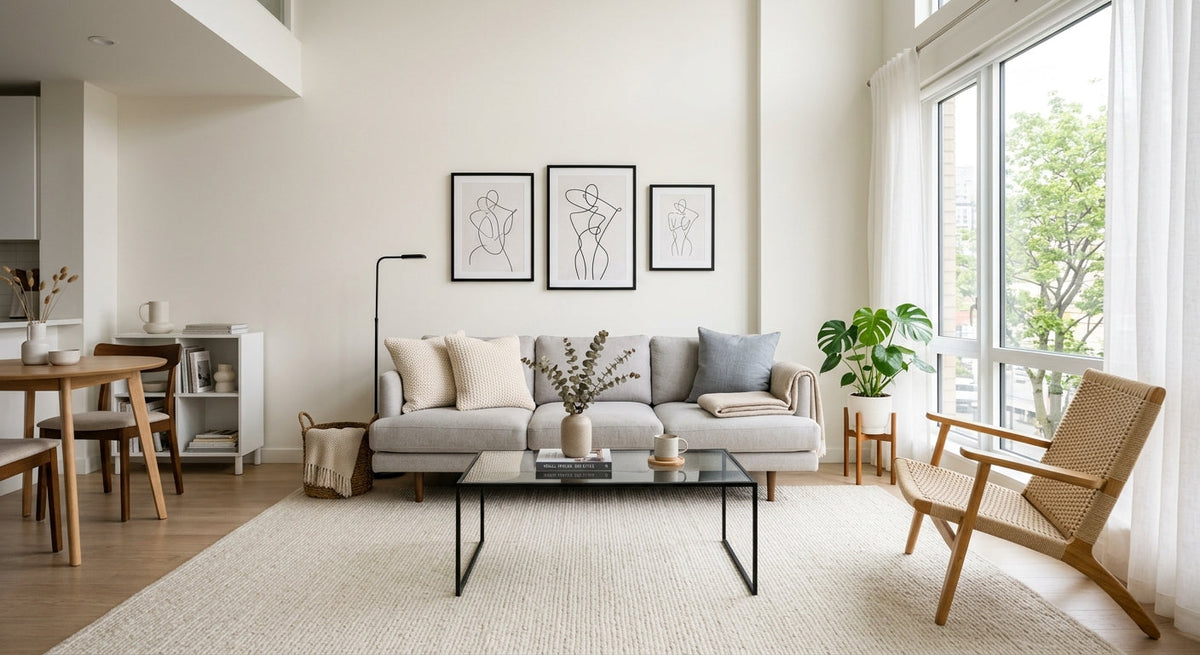
High-backed, bulky sofas overwhelm compact living rooms by blocking visual sightlines across the space. To make low ceilings feel higher and small rooms feel airier, opt for low-profile sofas and sleek Accent Chairs.
Low-slung furniture keeps the eye moving across the space uninterrupted. Pair a clean-lined modern sofa with mid-century inspired accent chairs featuring exposed legs or airy wireframes to maintain an open, uncluttered aesthetic.
2. Incorporate Multi-Functional & Nesting Coffee Tables
In a small living room, every piece of furniture needs to work twice as hard. Traditional rectangular coffee tables hog footprint space without offering versatility.
Switching to round coffee tables or modular nesting sets gives you flexibility. You can separate the tables when entertaining guests or stack them neatly together to reclaim floor space during daily routines. Explore versatile designs in our Coffee Tables Collection to find floating and space-saving options.
3. Choose Leggy Furniture over Solid Bases
Furniture that sits directly on the floor acts like a visual block, making small living rooms feel heavy and boxed in.
-
Exposed Legs: Look for sofas, credenzas, and chairs with slim wood or metal legs. Raising furniture off the floor lets light pass underneath, creating an illusion of additional floor area.
-
Acrylic & Glass: Transparent materials (like clear acrylic chairs or tempered glass tops) eliminate visual bulk entirely while providing full functionality.
4. Leverage Vertical Wall Space
 When horizontal floor space is limited, your walls become prime real estate. Floating shelving units, tall bookcases, and mounted sconces draw the eye upward, shifting focus away from tight floor dimensions.
| Storage & Lighting Layer | Wall Placement | Functional & Visual Benefit |
| High Curtain Hardware | Mounted near ceiling level | Draws the eye upward and gives the illusion of taller walls |
| Floating Display Shelving | Staggered mid-to-high wall | Elevates decor and books off floor surfaces to reclaim footprint |
| Mounted Wall Sconces | Flanking seating or main wall | Replaces bulky floor and end-table lamps to keep floors clear |
| Low-Profile Base Furniture | Grounded below storage | Maintains low visual weight so vertical wall elements breathe |
By mounting task lighting and display surfaces directly onto the wall, you eliminate the need for bulky floor lamps or side tables, leaving your floor area clear and uncluttered.
5. Strategic Mirror Placement for Reflection
Mirrors are one of the oldest interior design tricks for a reason: they bounce natural light deep into interior corners and fool the eye into perceiving twice the space.
-
Opposite Windows: Position a large floor mirror or an oversized hanging mirror directly across from your main window for maximum reflection.
-
Avoid Clutter Mirrors: Never place mirrors facing high-traffic storage or messy areas, as they double the visual noise.
6. Define Zones with an Oversized Area Rug
 A common mistake in small apartment decorating is choosing a tiny rug that floats awkwardly under a coffee table. Small rugs fragment the floor, making the living room look piecemeal.
Instead, select a larger area rug (such as 5'x8' or 6'x9') that anchors all major furniture pieces—at least the front legs of your sofa and accent chairs should rest on the rug. This unifies the seating zone and makes the room feel expansive.
7. Master Space Layouts: Multi-Functional Room Setup
Designing a small living room requires balancing aesthetics with practicality. Below is a comparison of layout strategies depending on your living room layout and lifestyle priorities:
| Layout Strategy | Best For | Furniture Focus | Primary Benefit |
| Open-Sightline Layout | Studio apartments & narrow rooms | Low-profile seating, acrylic tables | Keeps natural light flowing across the entire room |
| Zone-Separated Layout | Combined Living/Dining spaces | Oversized area rug, slim console table | Clearly defines distinct living areas without walls |
| Vertical Storage Layout | High-ceiling compact apartments | Floating shelves, tall wall units | Clears floor footprint for easy movement and seating |
8. Hang Curtains High and Wide
 Never limit curtain rods to the window frame in a small apartment. Mount your curtain hardware as close to the ceiling as possible and extend the rod 6 to 12 inches beyond the window frame on both sides.
Draping floor-length curtains this way creates a dramatic vertical line that tricks the mind into seeing taller walls and wider windows.
9. Embrace a Cohesive Color Palette
Busy patterns and high-contrast color shifts visually segment a small room. Maintain an airy environment by adhering to a cohesive palette:
-
Use soft neutrals (warm beige, soft ivory, or cool gray) on larger elements like walls and main sofas.
-
Add pops of rich color and texture through smaller accents like throw pillows, artwork, or sculpted seating from LeisureMod.
-
Stick to monochromatic shades of a single color family to unify complex layouts effortlessly.
Frequently Asked Questions
What furniture should I prioritize for a small apartment living room?
Prioritize multi-functional furniture with exposed legs, such as low-profile sofas, nesting coffee tables, and floating wall shelves. These pieces keep visual sightlines open while maximizing daily functional space.
How do I make a small, dark living room look larger?
Place large mirrors directly opposite natural light sources and hang floor-length curtains high near the ceiling. Complement this setup with transparent materials like acrylic or glass to bounce light around the room.
What is the best rug size for a small living room?
Choose an oversized rug (typically 5'x8' or 6'x9') that anchors all main seating legs rather than a tiny rug. A larger rug unifies the seating area into one cohesive zone without visually cutting up the floor.
Should I choose a sectional or a standard sofa for a compact apartment?
A low-profile 2-seater sofa paired with airy accent chairs is generally better than a sectional because it offers flexible arrangement options. If you want a sectional, choose a slim L-shaped model with an open chaise and raised legs.
How do I illuminate a small living room without using floor space?
Install wall-mounted sconces and floating wall lights instead of bulky floor or end-table lamps. Mounted fixtures free up valuable floor and tabletop real estate while directing light upward to heighten the space.